
3D Printing: A Path to Environmental Stewardship
By: Kevin Paul, AIA, NCARB, LEED AP, CFM | Sr. Vice President and Private Sector Real Estate Discipline Director at H2M architects + engineers
The construction industry has seen numerous innovations over the centuries in the form of new building techniques and cutting-edge technologies. In the realm of environmental protection, however, there are still improvements to be made. A recent study by the University of Virginia’s Environmental Institute found that — between extraction, production, and transportation — construction materials are responsible for approximately one-third of all global carbon dioxide emissions. Likewise, a 2023 study by the Rocky Mountain Institute found that, every year, new home construction in the United States generates over 50 million tons of embodied carbon dioxide, a measure of the total carbon dioxide produced in the entire lifecycle of a building material.
Complicating matters further is the specter of overdevelopment, which looms over communities across the United States. South Florida, for example, has seen a sharp reduction in its mangrove populations due to coastal and urban development, which has had the unfortunate effect of stifling Florida’s ability to withstand storm surges and filter pollutants out of stormwater runoff.
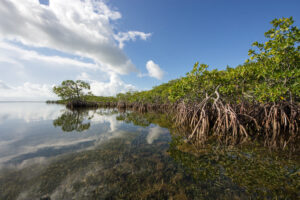
Mangroves provide a natural buffer against storm surges and filter pollutants out of stormwater runoff.
3D printing, also known as additive manufacturing, can significantly cut down on the carbon footprint generated by construction projects while also helping restore ecosystems hampered by overdevelopment. There are several major “green” benefits to utilizing 3D printing.
Produce Less Waste
3D printing is more environmentally sound than traditional building construction, in large part because it can be completed in less time using fewer resources. As the principal architect of the first 3D-printed home in the United States to receive a certificate of occupancy, I was able to witness firsthand how the efficiency of additive manufacturing can reduce environmental impact.
The construction process relied on a gantry-style 3D printer arm that printed concrete at a rate of 400-700 inches per minute. The additive manufacturing process reduced build time from the standard 6-8 weeks to approximately 48 hours of printing over the course of eight days. The remainder of the 1,500-square-foot home was completed within just 40 days. Furthermore, because the machine only required two workers at a time to operate, the project produced fewer carbon emissions and less construction and demolition waste.
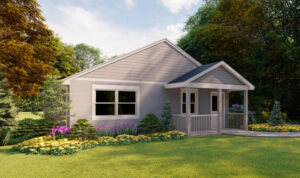
This single-family home, located in Suffolk County, NY, was completed within 40 days using 3D printing.
Reduce and Reuse
The materials used in the additive manufacturing process will vary depending on everything from the type and size of the structure to the climate of its location. Recycled materials can also be salvaged from the waste stream and incorporated into the concrete mixture. Alfred University’s Inamori School of Engineering, supported by a grant from the New York State Department of Environmental Conservation, recently collaborated with a private firm to develop “green concrete,” a concrete mix fortified by waste glass that would otherwise be sent to a landfill. This green concrete is less harmful to the environment, weighs less, and boasts a longer lifespan than its traditional concrete counterpart. Furthermore, researchers at the Inamori School believe that green concrete is more ideal as a building material in coastal communities such as those in Florida.
Improve Water Quality
Living Seawalls™ produced via additive manufacturing can help improve water quality and rejuvenate marine ecosystems while also protecting communities from rising sea levels. By leveraging 3D printing, Kind Designs creates structures custom-designed to have complex, habitat‑friendly geometries that mimic natural coastlines, encouraging the return of oysters, other epifauna, and diverse marine invertebrates. In regions like South Florida, where natural buffers such as mangroves have been lost to urbanization, 3D‑printed living seawalls represent an innovative dual solution: safeguarding infrastructure while actively restoring ecological function.
Conclusion
Creative use of additive manufacturing technologies can not only reduce negative impacts on the environment by minimizing waste, but actually generate positive impacts by helping to restore and protect ecosystems from future harm. Whether creating an entire building or developing modular components, 3D printing can elevate any developer’s ability to balance environmental responsibility with robust, sustainable construction.