
Beyond Landmarks: How to Leverage Historic Preservation for Economic Development
By: Sanyogita “San” Chavan, PP, AICP | Practice Leader for Land Use Planning at H2M architects + engineers
Maggie O’Neill | Principal Historic Preservation Specialist at City of Jersey City
This article originally ran in the May 2025 issue of NJ Municipalities, the official publication of the New Jersey State League of Municipalities.
Historic preservation efforts provide a valuable opportunity for communities to highlight their unique stories by connecting them to the properties and places of the past. Not only does historic preservation provide a sense of cultural identity, it can also serve as a boon for tourism and help revitalize entire communities.
Many are familiar with historic preservation planning in the context of historic landmarks and districts, but the true scope of what a municipality can achieve through creative application of historic preservation strategies is much broader. Thoughtful historic preservation planning can generate economic development while preserving the past and laying the groundwork for a vibrant future.
Codifying Local Designation Criteria
New Jersey’s Municipal Land Use Law (MLUL) sets forth the criteria, standards, and procedures by which municipalities may regulate the land uses within their jurisdiction, which also includes designating and regulating historic sites or districts. The MLUL encourages municipalities to both develop a historic preservation plan element as a component of their municipal master plans and to base any historic designations on sites identified in the municipality’s respective historic preservation plan element. This provides a foundation for the historic preservation ordinances, which in turn enable municipalities to protect historic places from inappropriate development and renovations beyond what state and federal designations alone can offer. The ordinances create local historic preservation commissions (HPCs) that allow municipalities to exercise greater control over zoning and development in potentially historic areas.

Municipalities can also use local designation to better share the history of underrepresented communities by highlighting historic places that state and federal registers may not have otherwise recognized. For example, the Jersey City HPC used local designation to highlight the significance of the former home of Venus Xtravaganza, an iconic figure in the history of the LGBTQ+ ballroom scene. Future preservation considerations include designating properties that served as safe houses along the Underground Railroad, identifying high-style houses of worship, and evaluating for future research themes that illustrate the diverse panoply of immigrants who left their homes in Europe and Asia to settle in Jersey City during the 20th century.
Seeking Public Opinion
Historic preservation planning should reflect the interests and priorities of the community. The City of Jersey City created a Historic Preservation Plan Subcommittee that brought together planning consultants and members of the Jersey City planning staff to develop a Historic Preservation Master Plan Element. The historic preservation team then sought input from the broader Jersey City committee via online surveys and a series of public workshops and farmers market events. Aligning the vision of the community with the vision of the Historic Preservation Master Plan Element is a challenge, but reconciling differing viewpoints and building public consensus is essential to the process.
Developing Adaptive Reuse Standards
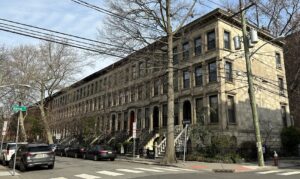
Adaptive reuse — a design technique that repurposes older, underutilized structures for new, modern uses while preserving historically- and culturally-significant elements — has grown increasingly popular as an alternative to new construction in cities. Not only does adaptive reuse tend to be less expensive and produce less construction and demolition waste than traditional construction projects, it also allows municipalities to update older buildings and increase local housing affordability while simultaneously preserving the community’s historic aesthetics. Additionally, it generates new tax revenue from buildings that would otherwise lie vacant.
Jersey City is home to several historical sites that developers have already converted or are converting into housing via adaptive reuse, including St. Boniface Church, St. Lucy’s Church, and the former Whitlock Cordage industrial complex. The latter now features over 200 affordable and market-rate apartments, with developers leveraging financial incentives such as Federal Rehabilitation Tax Credits and Low-Income Housing Tax Credits to help offset project costs. With Jersey City experiencing rapid population growth, particularly from professionals commuting to New York City, these residential adaptive reuse projects help ensure that prospective residents can afford to put down roots in the community.
Municipalities can and should develop adaptive reuse standards for historic buildings such as schools and houses of worship, update guidelines to allow preservation efforts to incorporate modern materials that maintain historic character, and look to adaptive reuse as positive criteria for zoning variance requests. All of this can be done through the historic preservation planning element, encouraging municipalities to consider the best possible uses for each historic property.
Creating Transition Area Overlays
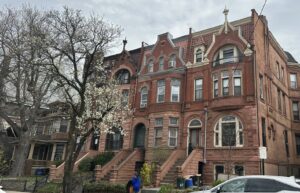
For neighborhoods adjacent to historic districts that may not themselves meet historic preservation criteria but are still deemed valuable to preserve, municipalities can establish transition area overlays that bridge the gap between the stricter regulations of a historic district and the more standard rules of a residential zone. These transition areas also blend historic and modern aesthetics to help ensure that future development does not lead to scattered, incongruous building aesthetics within the same neighborhood, such as a six-story building from the 21st century directly buffering a single-story structure built in the early 1900s.
Bolstering Flood Resiliency
Worsening storms and rising sea levels put a wide swath of historic places at risk of significant flood damage. Therefore, it is in the interest of both historic preservation and economic development to elevate and protect at-risk historic areas.
For historic district properties located in areas identified as floodplains by the New Jersey Department of Environmental Protection and/or the U.S. Federal Emergency Management Agency (FEMA), municipalities should consider increasing the maximum permitted building height. This will ultimately allow developers to raise historic district properties in accordance with FEMA’s base flood elevation, a metric that measures flood risk based on flood data from the previous 100 years. Wherever applicable, municipalities should incorporate standards outlined by the U.S. Department of the Interior Guidelines on Flood Adaptation for Rehabilitating Historic Buildings for historic properties located in flood hazard areas.
Funding Preservation Initiatives
Municipalities can fund these preservation efforts — and, by extension, the associated economic development efforts — through state and federal programs. Municipalities can apply to the New Jersey State Historic Preservation Officer for Certified Local Government (CLG) status, opening the door to numerous grants and loans that can offset costs to the taxpayer. The National Park Service, for example, offers a Federal Historic Preservation Tax Incentive Program that provides a 20-percent tax credit on the rehabilitation of certain historic buildings. The U.S. Department of Housing and Urban Development also offers the Community Development Block Grant, which can be used for a wide variety of preservation work.
On the state level, municipalities can apply for funding through the New Jersey Economic Development Authority’s Historic Property Reinvestment Program, the State of New Jersey Historic Trust, the Preserve New Jersey Historic Preservation Fund, and the New Jersey Cultural Trust Capital Preservation Grant Program. County funding is also available, but will differ from jurisdiction to jurisdiction.
Consulting Planning Professionals
Creative planning professionals can apply historic preservation concepts and principles outside of traditional historic districts and landmarks, directly supporting economic development. Since New Jersey requires updates to municipal master plans every 10 years, municipalities should consider folding these economic development strategies into their historic preservation element.