
The Groundwater Playbook
From Aquifers to Action
Groundwater Awareness Week is the perfect time to spotlight one of our nation’s most essential yet often overlooked resources: groundwater. With more than a third of Americans relying on groundwater for their drinking water and countless agricultural and industrial activities depending on it, understanding how we protect and manage this hidden asset is more important than ever. The Groundwater Playbook serves as your guide from aquifer basics to actionable steps, empowering communities, industries, and individuals to safeguard this vital resource for generations to come.
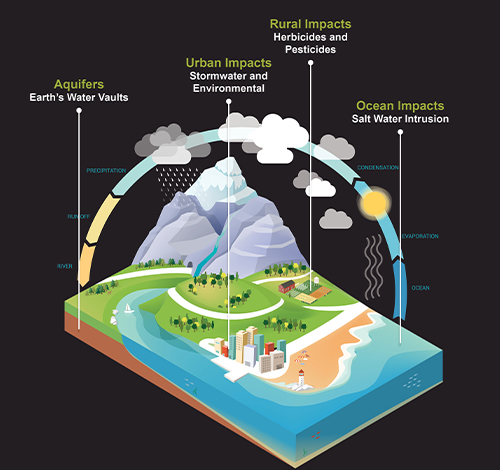
A Vital Resource
Approximately 115 million Americans, representing over one-third of the population, depend on groundwater as their primary source of drinking water, per the U.S. Department of the Interior. In the United States, agriculture relies heavily on both groundwater and surface water, with irrigation making up 47 percent of all freshwater withdrawals nationwide from 2010 to 2020, per the U.S. Department of Agriculture.
Aquifers – Earth’s Water Vaults
Aquifers are water-bearing underground layers of unconsolidated sand, gravel, or rock. Aquifers transmit groundwater and are used as suppliers for drinking water, irrigation, springs, and other water supplies. They are vital for farming, industry, and communities, and there are many major aquifers throughout the United States. So, which aquifer supplies your region?!
Threats to Groundwater
There are a variety of man-made and environmental threats to groundwater, including overuse, droughts, contamination from pesticides and fertilizers, industrial waste sites, and saltwater intrusion. Fortunately, solutions exist to address and manage these challenges.
Groundwater Solutions
Proactive groundwater planning and management is essential. Working with a hydrogeologist can help develop key groundwater protection strategies, including:
- Updating your source water protection plan.
- Monitoring of unaccounted water and identifying measures to reduce waste.
- Monitoring groundwater levels for signs of aquifer overpumping.
- Protecting the aquifer from new sources of contamination.